







If you are planning a trip to the land of the Incas, there is one thing you need to know before you board that plane: Peruvian food is not just sustenance; it is a religion here. As someone who has traveled from the busy streets of Lima to the floating markets of the Amazon, I can tell you that you get to know Peru through your stomach first, and your eyes second.
It is no coincidence that Peru has been voted the “World’s Leading Culinary Destination” multiple times. But with so many options on the menu, where do you start? You don’t want to waste your meals on tourist traps.
In this honest, fluff-free guide, I am going to walk you through the real deal—the dishes that locals actually eat and love.
Why Peruvian Food is Considered the Best in the World
Peruvian food is the result of a fortunate historical collision. Imagine the ancient foundation of the Incas (potatoes, corn, quinoa) mixing with ingredients brought by the Spanish conquistadors. Then, add the influence of African slaves, Chinese immigrants (Cantonese), and Japanese migrants.
The result is a fusion you won’t find anywhere else. We have Chifa (Chinese-Peruvian fusion) and Nikkei (Japanese-Peruvian cuisine). This diversity ensures your palate will never get bored here.
Fun Fact: Peru has over 3,000 varieties of potatoes. Yes, you read that right. Try to taste at least 5 different types during your trip!
The Kings of the Coast: Seafood Classics
The Peruvian coast, washed by the cold Humboldt Current of the Pacific Ocean, provides the freshest ingredients. Here, Peruvian food is spicy, acidic, and refreshing.
![Image: Fresh Peruvian Ceviche dish with sweet potato and corn. Alt Text: Traditional Peruvian food ceviche plate in Lima]
1. Ceviche: The National Heritage
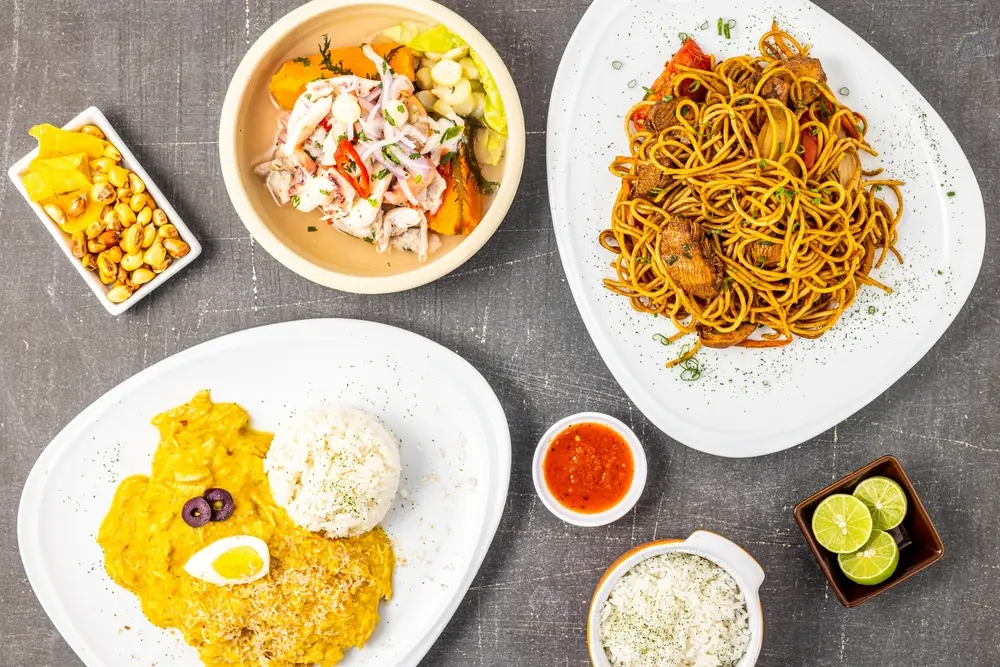
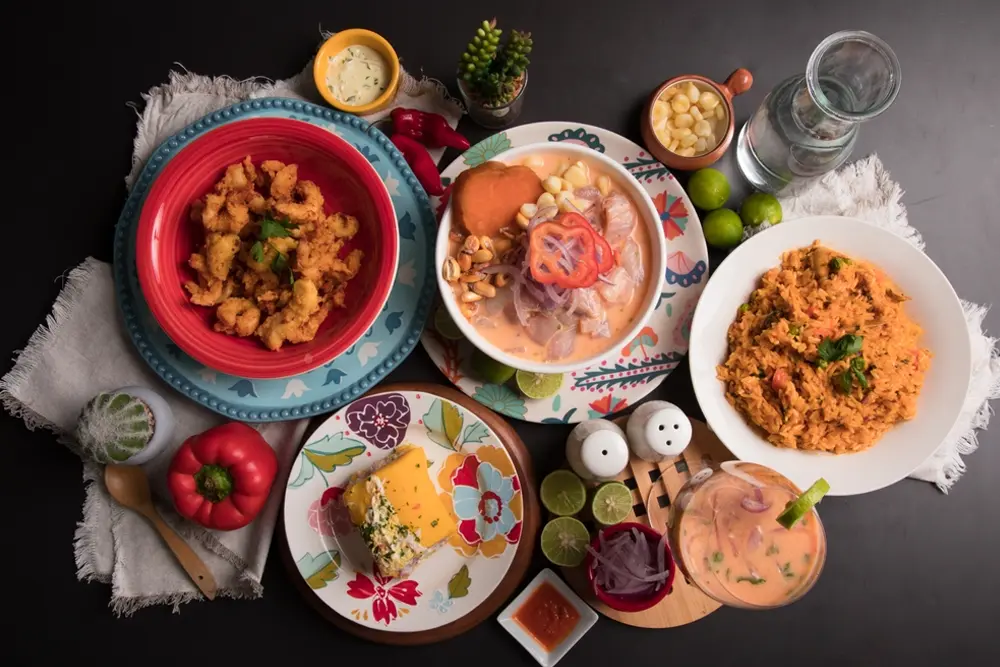
You cannot leave Peru without trying this. Fresh raw fish “cooked” only in Peruvian lime juice (which is uniquely acidic), ají limo (chili), red onions, and cilantro. It is usually served with sweet potato (camote) and Andean corn (choclo).
Local Tip: Eat Ceviche for lunch, never for dinner. Peruvians believe it is too “heavy” or cold for digestion at night. Most good Cevicheras close by 4:00 PM.
2. Lomo Saltado
Even though it’s a meat dish, it was born on the coast from Chinese influence. It consists of beef tenderloin strips stir-fried in a wok over high heat (that smoky flavor or wook hei is key), with onions, tomatoes, and soy sauce. It is served with french fries and rice. Yes, double carbs!
Where to eat it? Look for a place where you can see the flames rising in the kitchen. No fire, no flavor.
3. Ají de Gallina
This is a creamy, comforting stew made with yellow chili pepper (ají amarillo), bread, milk, cheese/pecans, and shredded chicken breast. It has a mild spicy kick but is mostly savory and creamy.
Treasures of the Andes: Highland Flavors
As you go up in altitude, Peruvian food becomes heartier to help you combat the cold. Here, tubers, corn, and Andean meats rule the table.
4. Cuy Chactado (Fried Guinea Pig)
This is where many tourists hesitate, but I encourage you to keep an open mind. Cuy (Guinea Pig) is an Andean delicacy, high in protein and low in fat. It is served fried and super crispy, flattened under a stone (hence “chactado”). The taste is somewhat like rabbit or dark meat chicken, but richer.
5. Pachamanca a la Olla
More than a dish, this is a ritual. Pork, beef, chicken, and cuy are cooked underground with hot stones, along with fava beans, sweet potatoes, and humitas. If you can’t make it to a countryside ritual, many restaurants in Cusco serve “Pachamanca a la olla,” which replicates these earthy flavors in the kitchen.
![Image: Traditional Pachamanca preparation in Cusco. Alt Text: Peruvian food ingredients for Andean pachamanca]
6. Rocoto Relleno
The pride of Arequipa. It looks like a red bell pepper, but be careful—the Rocoto is spicy! It is stuffed with minced meat, cheese, olives, and spices, then baked with a potato pie (Pastel de Papa) on the side.
Warning: If you have a low tolerance for spice, ask the waiter if the rocoto has been treated to reduce the heat.
7. Lomo Saltado de Alpaca
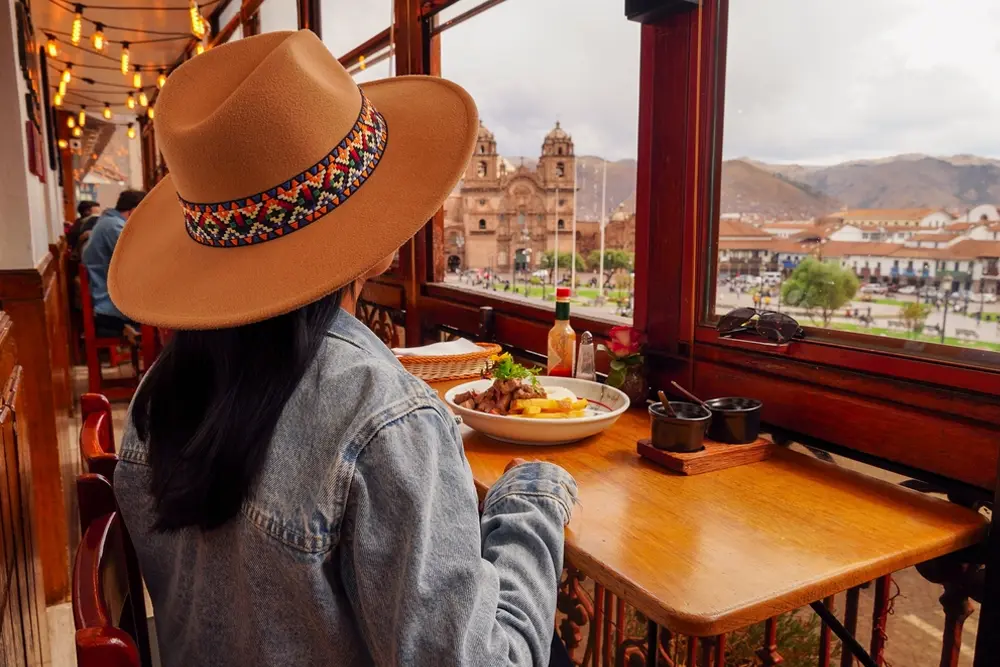
In Cusco, you will find a variation of the classic Lomo Saltado but made with Alpaca meat. Alpaca is leaner than beef and arguably healthier. It is a must-try Peruvian food experience when visiting Machu Picchu.
Pure Exoticism: Jungle Gastronomy
The Amazon is the exotic pantry of Peruvian food. You will find fruits you have never seen before and giant river fish.
8. Juane
The flagship dish of the Festival of San Juan. It is rice seasoned with palillo (local turmeric) and chicken, wrapped in bijao leaves which impart a unique smoky aroma. It looks like a green tamale but is much larger and filled with rice.
9. Tacacho con Cecina
Roasted green plantains mashed with pork fat (tacacho), served with smoked, dried pork meat (cecina). It is a powerhouse breakfast or lunch that will give you enough energy to trek through the jungle all day.
Must-Try Desserts and Drinks
No Peruvian food experience is complete without the sweet touch.
Picarones: Doughnut-like rings made from squash and sweet potato dough, fried and bathed in fig syrup (chancaca). Better than any donut you have ever had.
Chicha Morada: A refreshing non-alcoholic drink made from purple corn boiled with pineapple, cinnamon, and cloves. It is full of antioxidants.
Pisco Sour: The national cocktail. Be careful: it is treacherous. It tastes sweet and smooth (lime juice, syrup, egg white, Pisco), but it has a high alcohol content. One is pleasure, three is a hangover.
Essential Food Safety Tips for Tourists
As a travel expert, I want you to enjoy your trip without getting “Cusco Belly.” Here are my golden rules for eating in Peru:
Water: Never drink tap water. Always buy bottled water.
Raw Veggies: Avoid raw salads in very cheap menu restaurants. In tourist or mid-range restaurants, it is usually safe, but ask if they wash veggies with purified water.
The Altitude: In Cusco or Puno, digestion is slower due to the altitude. Eat light on your first night (a Quinoa soup is perfect) and avoid alcohol until you are acclimatized.
If you want to know more about specific culinary routes, check out our guide on [The Best Restaurants in Lima] or our review of [Traditional Markets in Cusco].
Conclusion
Exploring Peruvian food is an adventure in itself. Don’t limit yourself to 5-star restaurants; sometimes, the best flavor is found in a small “huarique” (hole-in-the-wall spot) where they cook with a grandmother’s love.
Are you brave enough to try the Cuy, or will you stick to the Lomo Saltado? Let me know in the comments below what dish you are most excited to try!